Technology
800V and Megawatt Charging: Why Chinese EVs Are Pushing Charging Speed
Chinese automakers are moving from 400V systems to higher-voltage platforms and extreme charging claims. Here is the engineering behind the numbers.
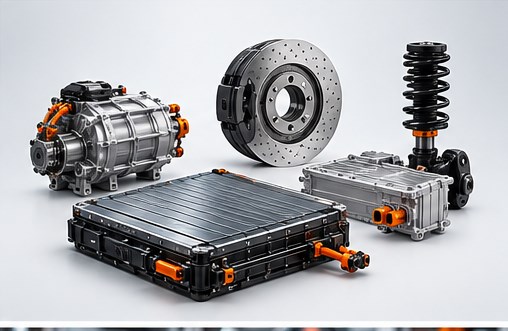
Charging speed has become one of the most visible areas of competition in China’s EV market. Vehicle makers increasingly advertise 800-volt architectures, high C-rates and charging systems that approach or exceed one megawatt under ideal conditions.
The engineering logic is straightforward: drivers are more willing to adopt EVs when charging stops become shorter. But the headline number on a charger is only one part of the system.
Why higher voltage helps
Electrical power is the product of voltage and current. To deliver more power, engineers can increase either value. Very high current creates heat and requires larger conductors, heavy cables and strong cooling. Raising system voltage allows the same power to be delivered with less current.
That is why 800V-class architectures have spread across premium and increasingly mainstream EVs. Higher voltage can reduce current for a given power level and improve the feasibility of very fast DC charging. It can also benefit motor and inverter design, although actual efficiency depends on the complete system.
Peak power is not average power
A charger rated at 600 kW or 1,000 kW does not mean a vehicle will draw that power throughout a session. The battery-management system adjusts power according to state of charge, cell temperature, pack voltage and safety limits.
The better metric is the charging curve: how much power the vehicle can sustain over a useful range such as 10% to 80%. A very high five-minute peak may be less valuable than a lower peak held for longer.
For comparisons, measure energy added and time rather than relying on a single kW figure. For example, adding 60 kWh in ten minutes represents an average of 360 kW over that period, regardless of whether the session briefly touched 500 kW or 800 kW.
Battery chemistry and thermal management are critical
Fast charging pushes ions through the cell quickly and generates heat. The pack has to enter the charger at the right temperature, often using navigation-based battery preconditioning. Coolant channels, heat exchangers, pumps and control software then keep the cells inside a safe operating window.
Cell design matters as well. Electrode thickness, particle design, electrolyte formulation, tab layout and internal resistance affect how quickly a cell can accept charge without excessive degradation or lithium plating.
This is why charging performance cannot be separated from battery durability. China’s updated GB 38031-2025 safety standard added a test after repeated fast-charging cycles, reflecting the fact that high charging rates are becoming routine rather than exceptional.
The grid side can be harder than the vehicle side
A megawatt-class charger can demand as much instantaneous power as a small commercial building. Deploying many such chargers at one location may require transformer upgrades, medium-voltage connections and significant demand charges.
Operators can reduce grid stress with battery-buffered charging. A stationary battery charges more slowly from the grid and then releases power quickly when a vehicle arrives. This can lower the peak grid connection required, though it adds equipment cost and energy-conversion losses.
High-power stations therefore make the most sense in places with heavy utilization: highway corridors, premium charging hubs, fleet depots and routes where time saved has clear economic value.
Why China is moving quickly
China combines a large EV fleet, intense automaker competition and dense urban charging networks. Vehicle makers can use charging speed as a differentiator, while infrastructure operators have enough potential users to justify high-power sites in major corridors.
The broader supply chain also helps. Battery companies, connector makers, power-electronics suppliers, charger manufacturers and automakers can develop systems together. This shortens the time between a cell-level improvement and a customer-facing charging feature.
What importers need to verify
An 800V Chinese vehicle does not automatically charge at its advertised speed overseas. Check:
- the connector and communication standard used in the destination market;
- the maximum voltage and current supported by local chargers;
- whether battery preconditioning works with local navigation data;
- the charging curve at typical ambient temperatures;
- repeated-session behavior after highway driving;
- cable and inlet thermal limits;
- warranty terms related to fast charging.
A vehicle designed around China’s newest charging infrastructure may be limited by older 400V chargers abroad. Some cars include boost converters to improve compatibility, but behavior differs by platform.
Charging speed is becoming a system metric
The next stage of EV competition will likely focus less on the biggest peak number and more on the complete experience: reliable charger discovery, automatic authentication, accurate route planning, preconditioning, a broad fast-charge plateau and predictable performance in winter and summer.
China’s push toward 800V and extreme charging power is important because it accelerates that system-level competition. The winners will not necessarily be the vehicles with the highest laboratory peak, but the ones that consistently turn a short stop into a meaningful amount of real-world range.
The charging metric that matters most
For a driver, the most useful result is often kilometers of realistic range added per minute. That combines vehicle efficiency with charging power. A very efficient car can add more driving range at 250 kW than a large inefficient SUV adds at 350 kW.
Station reliability also matters. Extreme charging power has little value if the site is frequently derated, occupied or unable to authenticate the vehicle. High-power hardware must therefore be paired with good software, payment systems and maintenance.
For fleet operators, demand charges can become a major cost. The economic model should include the highest power drawn from the grid, not only the energy price per kWh. Smart scheduling and battery buffers can sometimes save more money than buying the fastest possible charger.
FAQ
Does 800V mean the battery is exactly 800 volts? No. “800V architecture” is a class of high-voltage system; actual pack voltage changes with state of charge and design.
Can an 800V car use a 400V charger? Often yes, but performance depends on the vehicle’s conversion architecture and charger limits.
Is a 1 MW charger twice as fast as a 500 kW charger? Not necessarily. The vehicle may not accept the higher power, and the charging curve usually tapers as the battery fills.
Will extreme fast charging damage the battery? Well-designed vehicles manage temperature and current to protect the pack, but repeated high-power use is one reason durability validation is important.