Technology
Battery Swapping in China: NIO, Electric Trucks and the Economics of a Different Refueling Model
Battery swapping remains a niche globally, but China has created passenger-car and heavy-truck use cases where it can solve real operational problems.
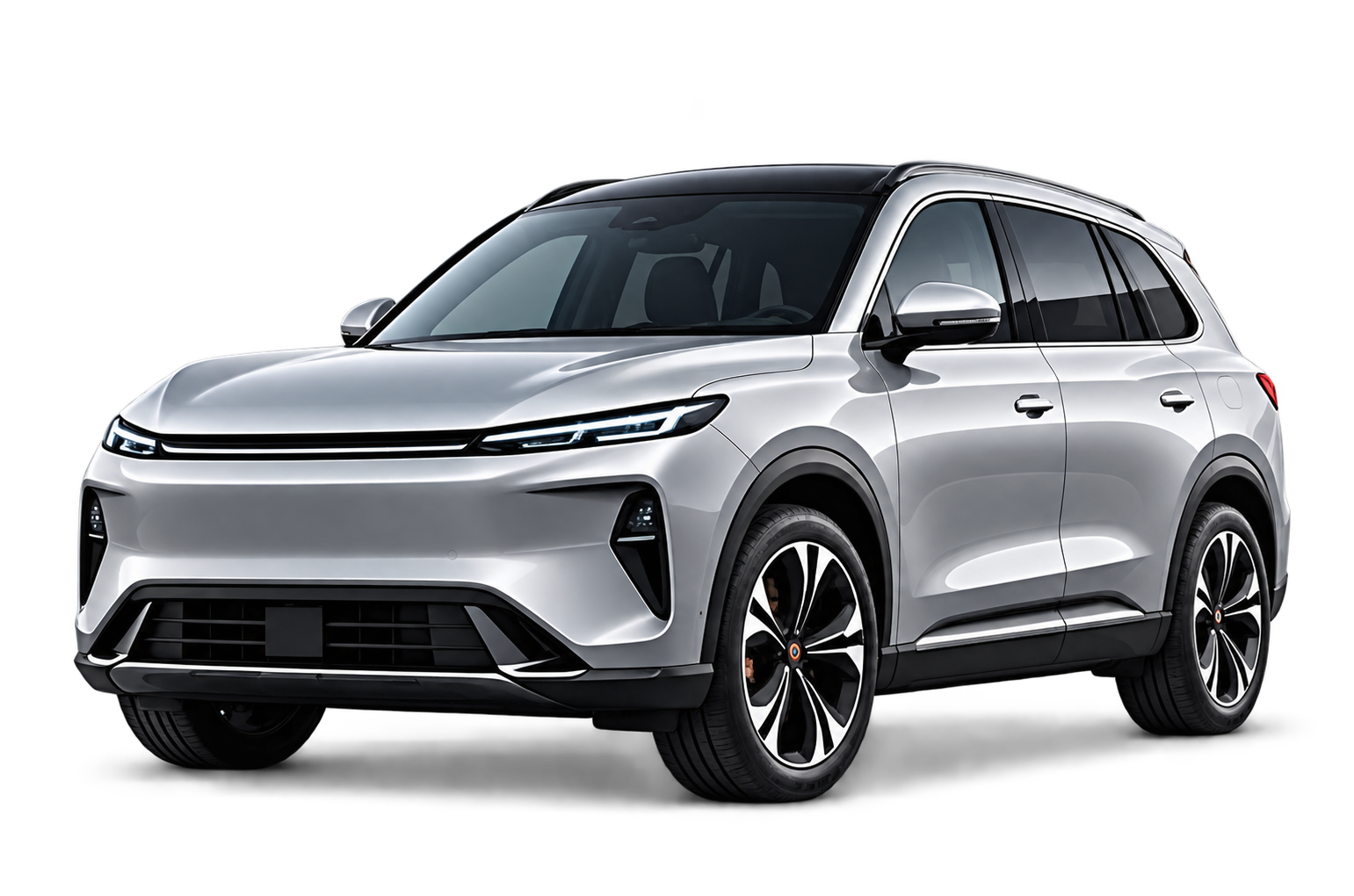
Most electric vehicles recharge by connecting a cable. China is also developing a second path: remove the depleted battery pack and install a charged one automatically.
Battery swapping is not new, and it is not automatically better than fast charging. What makes China unusual is that it has reached meaningful scale in both passenger cars and heavy trucks.
NIO shows the passenger-car model
In February 2026, NIO announced that its users had completed 100 million battery swaps. The company said a typical swap takes about three minutes. That level of usage demonstrates that swapping can become part of normal ownership when vehicles, stations and battery packs are designed as a single ecosystem.
For a passenger-car customer, the attraction is obvious: a stop can resemble refueling rather than charging. Swapping can also separate ownership of the vehicle from ownership of the battery, enabling subscription or battery-as-a-service models.
The infrastructure is much more complex
A swap station must store multiple expensive packs, keep them charged, manage thermal conditions and automatically inspect and move heavy batteries. It also needs land, grid capacity, robotics and a standardized mechanical interface.
That makes the business model sensitive to utilization. A station with few swaps per day ties up capital in equipment and inventory. A busy station can spread those fixed costs across many transactions.
This is why battery swapping usually works best inside a closed ecosystem with predictable volume rather than as a universal open standard.
Heavy trucks may be the stronger economic case
China’s electric-truck market provides a different reason for swapping. The IEA reports that more than 400,000 electric trucks were sold in China in 2025 and that swap-capable vehicles accounted for around 15% of those sales.
Many operate on predictable routes around ports, mines, steel plants and industrial hubs. In those environments, downtime has a direct financial cost. A truck that can replace a large pack quickly may return to service faster than one waiting for hundreds of kilowatt-hours to recharge.
Fleet operators also control routes and depots, making infrastructure planning easier. A swap station can be placed where trucks already queue or change shifts.
Swapping changes battery ownership
Conventional EV ownership bundles the car and battery together. Swapping allows the pack to become a managed asset. The operator can monitor pack health centrally, charge batteries when electricity is cheaper and remove degraded packs from circulation.
That creates potential advantages for second-life use and recycling because the operator knows the history of each battery. It can also create risks: customers depend heavily on the network operator remaining financially healthy and maintaining compatible packs for many years.
Standardization is the main barrier
A universal gasoline nozzle works across thousands of vehicle models. Battery packs are much more integrated into vehicle structure, cooling, crash protection and electronics. Standardizing dimensions and connectors can constrain vehicle design.
China’s standards program includes work on chassis battery swapping and swapping compatibility, but industry-wide interoperability remains difficult. Passenger-car systems are still largely brand-specific, while commercial vehicles have more incentive to converge around repeatable fleet configurations.
Fast charging and swapping can coexist
The two technologies solve different problems. Fast charging is flexible and can work with any compatible station. Swapping offers extremely short dwell time but requires dedicated infrastructure and standardized packs.
As charging power rises, the relative time advantage of swapping may shrink for passenger cars. For heavy trucks, however, the battery is so large that a multi-hundred-kilowatt charging session can still take significant time and put enormous demand on the grid.
How to evaluate a swap-based vehicle or fleet
Buyers should ask questions that go beyond the quoted swap time:
- How many compatible stations exist on the planned routes?
- Who owns the battery and who carries residual-value risk?
- What happens if the network operator exits the market?
- Are packs interchangeable across model years?
- How is battery health tracked and guaranteed?
- Can the vehicle also use conventional DC fast charging?
- What is the delivered electricity price compared with depot charging?
The answer can be very different for a private driver and a mining fleet.
A useful niche rather than a universal replacement
China’s experience suggests that battery swapping should not be framed as a winner-takes-all alternative to charging. It is an infrastructure model that becomes attractive when high utilization, controlled routes or very short turnaround times justify the extra capital.
That is why passenger-car swapping remains concentrated in a few ecosystems while truck swapping has found a natural home in industrial operations. The technology is most convincing when it solves an operational problem that fast charging cannot solve as cheaply or conveniently.
The hidden inventory problem
A swap network needs more batteries than vehicles actively swapping at a given moment because some packs are charging, cooling, being inspected or held as reserve inventory. Those batteries are expensive assets. The operator therefore needs enough station utilization to earn a return on both the robotics and the spare packs.
Standardization can reduce that burden, but only if several vehicle models share the same mechanical and electrical interface. Passenger cars often optimize floor height, wheelbase and crash structure differently, making a universal pack difficult. Commercial fleets have more reason to accept standardized dimensions in exchange for operational efficiency.
For grid operators, swapping has an interesting advantage: batteries can be charged when electricity demand is lower rather than at the exact moment the driver arrives. In principle, a station can behave partly like an energy-storage facility.
FAQ
Is swapping always faster than charging? The physical exchange can be very fast, but queue time and station availability still matter.
Do owners receive the same battery back? In most swap systems, no. The network manages a pool of compatible packs.
Why is swapping popular for some Chinese trucks? Predictable industrial routes and expensive downtime make rapid turnaround financially valuable.
Could one universal battery standard work for every car? Technically possible in theory, but difficult in practice because packs are deeply integrated into vehicle packaging and crash structures.