Technology
BEV, PHEV, EREV and HEV: China’s Powertrain Map Explained
A practical guide to the four powertrain categories shaping China’s passenger-car market and why they serve different use cases.
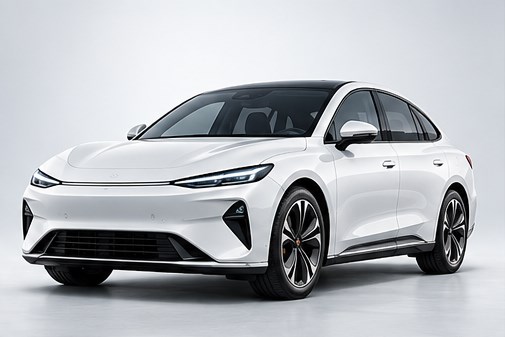
Chinese vehicle specifications can be confusing because several electrified powertrains are marketed side by side. A battery-electric vehicle, plug-in hybrid, range-extended EV and non-plug-in hybrid may all use electric motors, but they behave differently in daily use and have different charging requirements.
Understanding those differences is essential for buyers, importers and anyone comparing Chinese models.
BEV: battery-electric vehicle
A BEV is powered only by electricity stored in a traction battery. There is no gasoline engine for propulsion. The motor receives electricity through an inverter and drives the wheels directly or through a simple reduction gear.
The advantages are mechanical simplicity, strong efficiency, quiet operation and zero tailpipe emissions. The trade-offs are dependence on charging infrastructure and greater sensitivity to charging speed, temperature and long-distance route planning.
China’s market has made BEVs competitive across a wide price range. The IEA reports that in 2025 nearly 70% of BEVs sold in China were cheaper than comparable internal-combustion cars before incentives.
PHEV: plug-in hybrid electric vehicle
A PHEV combines a rechargeable battery with an internal-combustion engine. Depending on the design, the engine may drive the wheels directly, work with one or more electric motors, or do both. The battery is large enough for meaningful electric-only driving and can be charged from the grid.
PHEVs are attractive for drivers who can charge regularly but still want long-distance flexibility. Their real-world efficiency depends strongly on behavior. A PHEV that is charged every night and driven mostly within its electric range can use very little fuel. The same vehicle driven without plugging in may carry the weight and complexity of two powertrains while relying heavily on gasoline.
EREV: extended-range electric vehicle
An EREV, or range-extended EV, is usually designed so that the electric motor is the primary source of wheel torque. A combustion engine acts mainly as a generator that produces electricity after the battery charge falls. Some modern architectures can have more complex operating modes, but the defining user experience is closer to an EV with an onboard generator than to a conventional hybrid.
China is the main market for this configuration. In 2024, EREVs accounted for nearly one quarter of electric SUV sales in China, according to the IEA, and they were particularly prominent in large premium SUVs.
EREVs fit a specific Chinese use case: long highway journeys, family travel and buyers who want EV-like smoothness but worry about charging availability during holiday travel or in less-developed regions.
HEV: non-plug-in hybrid
A conventional hybrid uses a relatively small battery that is charged by the engine and regenerative braking. The driver does not plug it into the grid. The electric motor helps the engine operate more efficiently, especially in urban stop-and-go driving.
HEVs can reduce fuel consumption without requiring charging infrastructure, but they do not provide the long electric-only range of a PHEV or EREV. In China’s official new-energy-vehicle framework, non-plug-in hybrids are normally treated differently from BEVs, PHEVs and fuel-cell vehicles.
The most important comparison is not the badge
Two vehicles with the same label can behave very differently. Battery size, motor power, engine efficiency, control strategy and charging speed all matter. For example, a PHEV with a very large battery and an electric-first strategy may feel closer to an EREV in daily use than to an older parallel hybrid.
For practical comparisons, look at:
| Question | Why it matters |
|---|---|
| Usable battery capacity | Determines electric driving potential |
| DC fast-charging support | Important for long trips in PHEVs/EREVs |
| Electric-only range test cycle | Gives a standardized but optimistic reference |
| Engine-to-wheel mechanical path | Affects efficiency at sustained highway speeds |
| Fuel-tank size | Determines total range after the battery is depleted |
| Vehicle mass | Influences efficiency, braking and tire wear |
Which powertrain is best for export markets?
There is no universal answer. BEVs work best where home or workplace charging is common and public fast charging is reliable. PHEVs can suit markets where fuel stations are abundant but charging infrastructure is uneven. EREVs can reduce range anxiety while keeping most day-to-day driving electric, but they still carry an engine, fuel system and emissions-control hardware.
Importers should also check local regulation carefully. Incentives, registration categories, emissions rules and customs treatment may distinguish among BEVs, PHEVs and EREVs. A model that receives favorable treatment in China may not receive the same classification abroad.
Why China supports multiple architectures
China’s market is large enough to support several solutions at once. Dense megacities can favor pure EVs; long intercity travel and uneven charging can favor plug-in hybrids or EREVs; commercial fleets may prioritize total cost of ownership above all else.
The result is not a single linear transition from gasoline to battery electric. It is a competitive transition in which several electrified powertrains are being optimized for different price points and driving patterns.
A simple decision framework
A buyer with dependable home charging and mostly predictable daily mileage will usually get the greatest mechanical simplicity from a BEV. A driver who can charge at home but regularly travels to regions with weak public infrastructure may find a PHEV or EREV more convenient. A non-plug-in hybrid can make sense where there is little charging access at all.
For fleet operators, the calculation should be based on route data. A plug-in vehicle that is rarely plugged in can perform much worse than the brochure suggests. Conversely, a PHEV fleet with guaranteed overnight charging may run most urban kilometers electrically while preserving long-distance flexibility.
The same logic applies to import planning. A market with expensive gasoline but cheap electricity can strongly favor BEVs. A market with low fuel prices and unreliable public charging may adopt PHEVs first even when battery-electric technology is available.
FAQ
Is an EREV the same as a PHEV? It is usually treated as a form of plug-in hybrid, but its architecture and driving experience are more electric-first because the motor is normally the primary traction source.
Does a bigger battery always mean a better PHEV? No. A larger battery adds electric range but also mass and cost. Charging speed and how often the owner plugs in matter just as much.
Why are EREVs popular in China? They suit large family vehicles and long-distance travel while preserving EV-like propulsion for everyday driving.
Which architecture is mechanically simplest? A BEV, because it does not need a combustion engine, exhaust after-treatment, fuel system or multi-mode hybrid transmission.