Technology
China’s ADAS Boom: What NOA, L2 and the 2026 Safety Rules Mean
Advanced driver assistance is becoming standard equipment in China, but new mandatory rules are drawing a clearer line between assistance and automation.
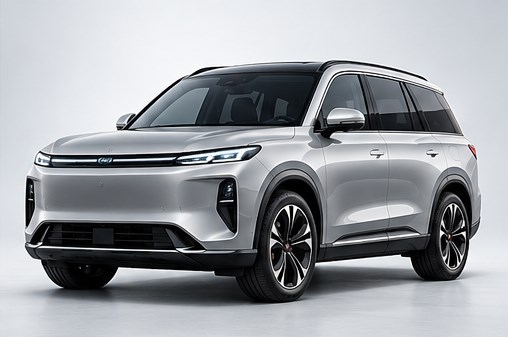
Advanced driver-assistance systems have moved rapidly from premium options to mainstream features in China. Highway navigation assistance, automated lane changes, urban route guidance and automated parking are common marketing themes across new vehicles.
The spread is fast enough that regulators are tightening the language and safety requirements around these systems. In June 2026, China published the mandatory national standard GB 47955-2026 for combined driving-assistance systems, scheduled to take effect on January 1, 2027.
The scale is already large
MIIT says that in 2026, 70% of newly sold passenger cars in China were equipped with combined driving-assistance functions and more than 30% had navigation-on-autopilot, or NOA, functions.
Those numbers explain why regulation is urgent. When a feature reaches millions of ordinary drivers, the problem is no longer only whether the algorithm works in a demonstration. Human-machine interaction, misuse, driver monitoring and clear operating boundaries become central safety issues.
L2 assistance is not autonomous driving
The most important concept is driver responsibility. A Level 2-style system can control steering and speed at the same time, but the driver remains responsible for monitoring the road and taking over when necessary.
NOA can make the system feel more capable because it may follow a navigation route, change lanes, enter or leave highways and negotiate complex urban roads. The automation of more maneuvers does not by itself change the legal responsibility model.
This distinction is easy to blur in advertising. A car that can drive many kilometers without obvious intervention may still require continuous driver supervision.
What the new Chinese standard tries to address
GB 47955-2026 defines safety requirements for combined driving-assistance systems and creates a mandatory baseline for the technology. MIIT describes the system as one that assists with lateral and longitudinal vehicle control under specified operating conditions while the driver continues to observe traffic and control the vehicle.
The standard is part of a larger effort covering software upgrades, information security, driver monitoring and data recording. The goal is to reduce ambiguity about what a system can do and how it should respond when the driver is inattentive or the environment exceeds the system’s capability.
Sensors do not tell the whole story
Chinese vehicles may use cameras, radar, ultrasonic sensors and lidar in different combinations. Counting sensors is not a reliable way to rank systems. Perception software, calibration, data quality, computing architecture and fallback behavior are equally important.
A lidar-equipped vehicle can still make poor decisions. A camera-heavy system can perform well in certain conditions but struggle in others. Buyers should look for validated behavior in rain, glare, construction zones, poorly marked roads and edge cases rather than assuming that a particular sensor guarantees autonomy.
Driver monitoring is becoming more important
The central weakness of capable Level 2 systems is complacency. The better the assistance performs, the easier it is for a driver to stop paying attention. Modern systems therefore use steering-wheel torque, capacitive sensing or driver-facing cameras to determine whether the driver is engaged.
A robust system should escalate warnings and reduce or end assistance when the driver fails to respond. The exact strategy is a key part of real-world safety and should be tested as seriously as lane-centering accuracy.
What buyers should verify in imported vehicles
ADAS features can behave differently outside China because maps, lane conventions, road signs, cellular services and regulatory approvals differ. Importers should verify:
- which functions are enabled in the destination country;
- whether local maps and navigation data support NOA;
- whether over-the-air updates work outside China;
- whether emergency services and connected features remain functional;
- the language and clarity of driver warnings;
- whether cameras and radar are calibrated for local service networks;
- how software changes are documented and approved.
A feature list copied from a Chinese brochure may therefore overstate what an export vehicle can actually deliver.
The market is entering a more disciplined phase
China’s ADAS competition has produced rapid innovation and lower hardware costs. It has also created pressure to use aggressive marketing language. Mandatory standards are a sign that the industry is moving from feature proliferation toward clearer safety boundaries.
For consumers, the practical rule is simple: treat current combined driver-assistance systems as assistance, not a substitute for a driver, unless the vehicle is explicitly operating under an approved automated-driving regime. The more capable the system feels, the more important that distinction becomes.
A better way to compare ADAS systems
Marketing demonstrations usually show ideal conditions. A useful comparison should instead include construction zones, faded lane markings, motorcycles, unusual merges, heavy rain and sudden cut-ins. Drivers also need to know how smoothly the system gives control back when it reaches its limits.
False confidence is a safety issue. A system that works perfectly for 99 kilometers can encourage a driver to disengage mentally, which makes the one difficult kilometer more dangerous. That is why driver-monitoring design deserves the same attention as lane-centering performance.
For fleets, ADAS logs can also become valuable maintenance data. Repeated camera-blocked warnings may indicate windshield or calibration problems, while frequent emergency interventions can identify risky routes or driver behavior.
FAQ
Is NOA autonomous driving? Usually no. Current NOA features are generally supervised assistance and still require an attentive driver.
Does lidar make a system autonomous? No. Lidar is only one sensor. Software, redundancy, operating domain and regulatory approval determine the actual capability.
Will the 2027 standard stop automakers from offering ADAS? No. It creates a mandatory safety baseline for combined assistance systems.
Can an imported Chinese car use the same NOA abroad? Not necessarily. Maps, regulations, cloud services and homologation can limit or disable functions outside China.