Regulation
China’s EV Battery Safety Rules in 2026: GB 38031-2025 Explained
China’s updated mandatory traction-battery standard took effect in July 2026. Here are the tests and design implications that matter.
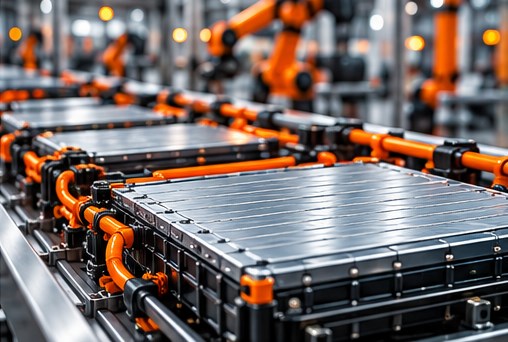
Battery safety is one of the most important regulatory issues in the electric-vehicle industry. China’s updated mandatory national standard, GB 38031-2025, took effect on July 1, 2026 and raises the baseline for traction-battery safety testing.
The standard matters beyond China because many vehicles and battery systems developed for the Chinese market are also exported. It also provides a useful window into how regulators are responding to higher charging power, larger packs and growing EV volumes.
What the standard covers
GB 38031-2025 applies to power batteries used for electric-vehicle propulsion. It does not apply to ordinary low-voltage auxiliary batteries. The revised requirements update thermal-diffusion testing and add new test conditions intended to reflect real-world hazards more closely.
China’s State Council summary highlights three changes in particular: more detailed thermal-propagation requirements, a new bottom-impact test and a fast-charge-cycle safety test.
Thermal propagation is the core issue
A cell can fail because of internal defects, mechanical damage, electrical abuse or external heating. The engineering challenge is preventing that failure from propagating through the pack and creating an uncontrollable fire.
Modern battery packs therefore use multiple layers of protection: cell spacing, thermal barriers, cooling plates, vent paths, fire-resistant materials, fuses, contactors, software monitoring and a strong enclosure. A good design assumes that individual components can fail and tries to prevent a single failure from escalating.
The updated Chinese standard clarifies temperature, observation time and vehicle-test conditions for thermal diffusion. That pushes manufacturers to validate the whole pack and vehicle response rather than relying only on cell-level claims.
Why the bottom-impact test matters
Many EV batteries are mounted under the passenger compartment. That location is efficient for packaging and lowers the center of gravity, but it exposes the pack to road debris, curb strikes and underbody impacts.
The new bottom-impact test is intended to assess whether the pack’s lower protection can withstand a severe strike without creating fire or explosion hazards. For vehicle engineers, this affects enclosure thickness, crossmembers, skid protection, ground clearance and how loads are distributed around the pack.
It also reminds buyers that battery safety cannot be judged by chemistry alone. A robust LFP pack with poor underbody protection can still be vulnerable to mechanical damage.
Fast charging creates a new test case
High-power charging increases thermal and electrochemical stress. GB 38031-2025 adds a test requiring an external short-circuit evaluation after 300 fast-charge cycles, with no fire or explosion permitted.
This is important because charging claims are rising rapidly. Some Chinese vehicles now advertise extremely high peak charging power. A credible system needs not only a fast initial charge but also durable cells, connectors, busbars, coolant loops and control software that can tolerate repeated high-power use.
What importers should ask suppliers
A certificate or compliance statement is useful, but commercial buyers should request technical evidence appropriate to their market. Key documents can include:
- the exact battery-pack model and cell supplier;
- test reports tied to that configuration;
- battery-management-system version and change-control process;
- pack IP rating and underbody protection details;
- thermal-event detection and occupant-warning logic;
- service procedures for damaged packs;
- transport documentation under UN 38.3 and local dangerous-goods rules;
- recall and field-monitoring processes.
The purpose is traceability. A test report for a different pack variant or an older cell should not be treated as proof for the vehicle being purchased.
China’s standards are expanding beyond the battery
MIIT’s 2026 automotive standardization plan covers charging interoperability, battery recycling, battery-management systems, heavy-vehicle battery durability, carbon footprints and software-defined vehicle topics. Battery safety therefore sits inside a broader regulatory system that is becoming more detailed as EV technology matures.
For exporters, this can be both an advantage and a complication. Domestic standards encourage manufacturers to improve engineering discipline, but compliance in China does not automatically satisfy EU, UK, Australian, Middle Eastern or other market requirements. Homologation has to be mapped market by market.
What buyers should take from the new rule
The standard should not be used as a marketing shortcut such as “Chinese batteries cannot catch fire after 2026.” No regulation can eliminate all failures. What it does is raise the mandatory test baseline and force vehicle makers to design against more demanding scenarios.
For consumers, the most meaningful indicators remain a combination of validated pack design, responsible charging control, crash protection, transparent recall practices and competent service. For importers and fleets, the new standard is a useful minimum reference, not the end of technical due diligence.
How the rule affects vehicle engineering
A tougher battery test does not only affect the cell supplier. It can change the underbody structure, pack enclosure, cooling system, warning strategy and software calibration of the entire vehicle. This is why regulatory updates can trigger engineering changes even when the advertised battery capacity remains unchanged.
The bottom-impact requirement is particularly relevant to SUVs and vehicles used on poor roads. Ground clearance alone is not enough; engineers need to manage how a concentrated impact load travels through the pack enclosure and surrounding chassis.
For service organizations, the standard reinforces the need for post-crash battery inspection. A pack may be electrically functional immediately after a strike but still have internal mechanical damage. Workshops need procedures for isolation, quarantine and thermal monitoring of suspect batteries.
FAQ
Does GB 38031-2025 apply outside China? It is a Chinese mandatory standard. Other markets use their own homologation rules, although Chinese manufacturers may use the same engineering improvements in export vehicles.
Does passing the test mean a battery can never catch fire? No. Standards define test conditions and minimum performance; they cannot reproduce every possible accident or defect.
Why test after repeated fast charging? High-power charging adds thermal and electrochemical stress, so regulators want evidence that repeated use does not create unacceptable safety behavior.
Should importers ask for the full test report? Yes, especially for commercial programs. The report should correspond to the exact pack and vehicle configuration being purchased.