Regulation
China’s L3 and L4 Autonomous-Driving Rules: GB 44721-2026 Explained
China has published a mandatory safety standard for Level 3 and Level 4 automated-driving systems. Here is what changes when the driver is no longer always responsible.
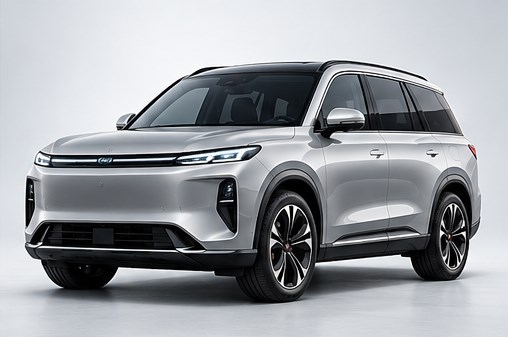
Driver assistance and automated driving are not the same regulatory problem. In an assistance system, the driver remains responsible for supervising the road. At higher levels of automation, the system can perform the driving task within defined conditions, which requires a much more formal safety framework.
China published GB 44721-2026, the mandatory national standard titled Safety Requirements for Automated Driving Systems, on July 30, 2026. It is scheduled to take effect on July 1, 2027.
What vehicles the standard covers
MIIT says the standard applies to M- and N-category vehicles equipped with Level 3 conditional automation or Level 4 high automation. It does not apply to automated parking systems.
That scope is important. The standard addresses vehicles operating on public roads where an automated-driving system may take responsibility for dynamic driving tasks within a defined operational design domain, or ODD.
Operational design domain is the key concept
An automated system is not simply “self-driving” everywhere. Its capability is bounded by conditions such as road type, speed range, weather, geography, lighting and traffic environment.
A Level 3 highway system might operate only on mapped expressways at certain speeds. A Level 4 shuttle may work only inside a geofenced district. Safety depends on recognizing when those conditions are satisfied and what happens when they are not.
Level 3 creates the difficult handover problem
In Level 3 automation, the system performs the driving task but may ask a human to take over when necessary. That creates a transition problem: a driver who has not been actively monitoring the road needs enough warning and situational awareness to resume control safely.
Standards therefore need to address takeover requests, user information, training and minimum-risk behavior if the driver does not respond. MIIT says GB 44721-2026 includes more detailed requirements for user notification and operating training and creates a standardized test-scenario framework.
Level 4 shifts more responsibility to the system
A Level 4 system is expected to handle failures or reach a minimal-risk condition without relying on a human fallback inside its ODD. That makes redundancy and fault management especially important.
Steering, braking, power supply, sensing, computing and communication may require redundant paths. The system needs to identify degraded states, record relevant events and respond safely when a sensor is blocked, a component fails or the environment changes unexpectedly.
China is linking national and international rules
MIIT notes that a UN global technical regulation for automated-driving systems was approved in June 2026 and that the Chinese standard is designed to remain aligned with core international requirements while adding details suited to Chinese roads and regulation.
This matters for export programs. Greater alignment can reduce duplication, but it does not create automatic approval in another jurisdiction. Vehicle certification, liability rules, insurance, road laws and data requirements remain national or regional.
Data and software become part of vehicle safety
An automated vehicle is defined as much by software as by mechanical hardware. That means version control, cybersecurity, map data, remote updates and event recording become safety-critical.
A change to perception software can alter how the car behaves even when the physical vehicle is unchanged. Regulators therefore need traceability: which software version was installed, what was changed, how the update was validated and what happened immediately before a safety event.
Why commercial deployment will remain gradual
A mandatory standard does not mean Level 3 and Level 4 vehicles can immediately drive anywhere in China. Product approval, local road access, insurance and operational restrictions still matter. MIIT noted that two Level 3 vehicle models received conditional market-access approval in 2025, illustrating the controlled nature of the rollout.
The likely path is expansion by defined scenarios: specific highways, cities, logistics routes, robotaxi zones or shuttle services where data and infrastructure are strong enough to support operation.
What international buyers should understand
Importing a vehicle with hardware advertised as “L3-ready” does not create legal Level 3 functionality in another country. Approval depends on local law and on whether the exact software, sensors and operational domain have been certified.
For buyers, the safest approach is to separate three questions:
- What is the hardware technically capable of?
- What software functions are actually enabled?
- What functions are legally approved where the vehicle will be used?
Only when all three align should a vehicle be described as operating at a particular automated-driving level.
China’s new standard is therefore significant not because it suddenly creates fully autonomous cars, but because it establishes a clearer technical baseline for the transition from supervised assistance to systems that may take responsibility for the driving task.
Why legal responsibility becomes more complicated
At Level 2, the rule is relatively clear: the driver supervises the system. At Level 3, responsibility can shift during an automated-driving session, so event data becomes essential. Investigators may need to know whether the system was active, whether a takeover request was issued and how the driver responded.
Insurance products will need to evolve around the same questions. A collision caused by a mechanical failure, software decision or failed driver handover may involve different liability paths.
For manufacturers, this raises the importance of reproducible software builds and secure event recorders. A vehicle should be able to establish which software was running at the time of an incident without depending on ambiguous user recollection.
FAQ
Does L3 mean the driver can sleep? Not generally. Level 3 systems can require the human to take over after a request, so the allowed driver behavior depends on local law and the approved system design.
Is Level 4 the same as a car that can drive anywhere? No. A Level 4 system can still be limited to a specific operational design domain such as a city district or mapped route.
When does GB 44721-2026 take effect? It is scheduled for July 1, 2027.
Will a China-approved L3 car automatically be L3 in Europe? No. Approval and road-use rules are jurisdiction-specific.