Brands
Chinese Car Brands Explained: BYD, Geely, SAIC, Chery, GWM, NIO, XPeng and Li Auto
A neutral map of eight major Chinese automaker groups and the different technology, export and market strategies behind their brands.
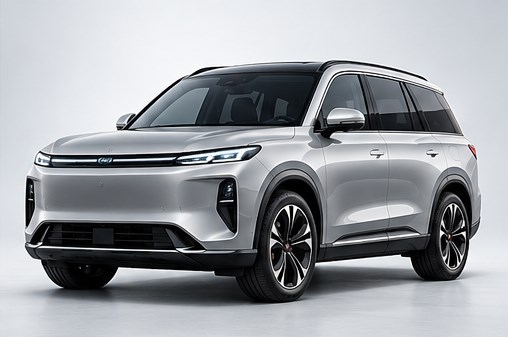
“Chinese cars” are often discussed as though they come from one type of company. In reality, the market includes enormous traditional state-linked groups, privately owned global manufacturers, battery-integrated giants and younger EV specialists.
The differences matter because each company approaches batteries, software, exports and dealer networks in a different way.
BYD: scale and vertical integration
BYD is one of the clearest examples of vertical integration. The group is deeply involved in batteries, electric powertrains, semiconductors and vehicle manufacturing. Its passenger-car portfolio spans affordable models, mainstream sedans and SUVs, plug-in hybrids and premium sub-brands.
BYD’s strength is not one individual model but the ability to reuse battery and powertrain technology across a very large lineup. Its LFP-based Blade Battery strategy is closely connected to China’s broader shift toward LFP chemistry.
Geely: a multi-brand global group
Geely operates a broad portfolio that includes domestic and international brands and partnerships. This gives the group access to engineering, design and distribution resources across several markets.
Geely’s strategy illustrates how difficult national labels have become. A platform can involve Chinese development, European engineering teams, global suppliers and production in multiple countries.
SAIC: scale, joint-venture history and MG
SAIC is one of China’s largest established automaking groups and has decades of experience through joint ventures. Internationally, the MG brand gives SAIC a familiar name in markets such as Europe.
MG’s EV expansion shows how a Chinese manufacturer can use an established foreign brand identity rather than launching every product under a new Chinese name.
Chery: export experience
Chery built an international business earlier than many newer EV startups. The company has sold vehicles across Latin America, the Middle East, Eastern Europe and other regions and operates multiple brands.
Its strength is a broad powertrain and price portfolio rather than a pure-BEV identity. That can be useful in markets where charging infrastructure is developing gradually.
Great Wall Motor: SUVs and pickups
Great Wall Motor, or GWM, is strongly associated with SUVs and pickups. Its portfolio includes several brands and electrified powertrains.
This specialization can be valuable in regions where body-on-frame vehicles, larger SUVs or utility-oriented products remain important. Electrification for these segments may involve hybrids and PHEVs as much as pure BEVs.
NIO: premium EVs and battery swapping
NIO built its identity around premium battery-electric vehicles, digital services and battery swapping. In February 2026, the company announced 100 million cumulative swaps across its network.
The swapping model differentiates the ownership experience but also creates infrastructure dependence. NIO therefore has to build both cars and an energy-service network.
XPeng: software and driver assistance
XPeng has emphasized software, connected vehicles and advanced driver assistance as major brand differentiators. This positions the company directly inside China’s fast-moving NOA and smart-cockpit competition.
International expansion requires localization because driver-assistance features, maps and cloud services cannot simply be copied unchanged from China.
Li Auto: the range-extender specialist
Li Auto became strongly associated with large family SUVs using extended-range electric powertrains. That approach combines an electric driving experience with a gasoline generator for long-distance flexibility.
The success of the segment helped make EREV a major category in China’s premium SUV market.
Why ranking brands by one metric is misleading
Sales volume, technology, profitability, export reach and brand perception measure different things. A company can lead in domestic volume but have a small international network. Another can have impressive software but weak manufacturing scale.
For procurement or market analysis, compare manufacturers across a consistent framework:
| Dimension | Questions to ask |
|---|---|
| Scale | How many vehicles and platforms does the group support? |
| Powertrain | BEV, PHEV, EREV or mixed strategy? |
| Battery | Internal production or external supplier? |
| Software | How dependent are features on domestic cloud services? |
| Export network | Is there local sales and service infrastructure? |
| Parts | Are components stocked in the destination region? |
| Financial durability | Can the company support vehicles for many years? |
The market will keep changing
China’s auto sector remains highly competitive, and brand portfolios can change quickly. Mergers, partnerships, discontinued models and new sub-brands are normal.
For that reason, buyers should focus less on memorizing every badge and more on understanding the parent company, technology architecture and after-sales system behind it. Those factors are more durable than a single model name.
How to compare parent groups rather than badges
China’s multi-brand strategy can confuse overseas buyers. A new badge may look like a startup even though it shares factories, platforms and financing with a large parent group. Conversely, an independent-looking technology brand may carry significant infrastructure obligations of its own.
When researching a model, trace the ownership chain and platform. Ask whether the battery, motor and software stack are shared with higher-volume vehicles. Shared components can improve parts availability and reduce engineering risk.
For long-term ownership, the parent company’s export commitment matters. A brand can enter a country quickly with an importer agreement and leave just as quickly if sales disappoint. Local subsidiaries, warehouses and service training are stronger signals of durable commitment.
FAQ
Which Chinese brand is “best”? That depends on segment, market and criteria. The groups differ in scale, software strategy, powertrains and export support, so a single ranking is not very useful.
Are all brands independent companies? No. Many sit inside larger groups or share platforms and components with sister brands.
Why do Chinese groups launch so many sub-brands? Separate brands allow different pricing, design and customer positioning while sharing engineering underneath.
What should overseas buyers prioritize? Local service, parts, software support and the durability of the parent company matter more than launch hype.