Industry
Chinese EVs in Europe: Tariffs, Market Share and the Shift Toward Localization
Chinese-made cars have become a meaningful part of Europe’s EV market. Tariffs are changing how manufacturers enter the region, not ending the competition.
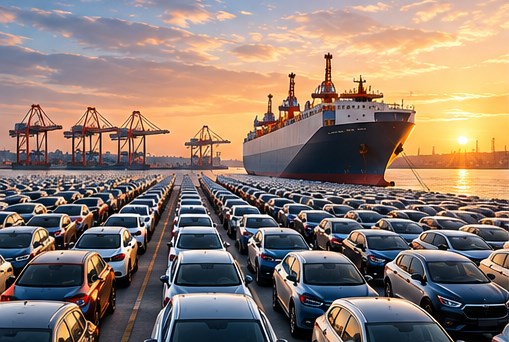
Europe is one of the most closely watched markets for Chinese electric vehicles because it combines high EV adoption, strong incumbent automakers and an active trade-policy response.
The numbers show that Chinese-made vehicles are already significant. According to ACEA, the European Union imported 1,002,742 Chinese-made cars in 2025. Of those, 42.9% were battery electric. Chinese-made cars represented 7% of total EU car sales and 20% of battery-electric car sales.
“Chinese-made” and “Chinese brand” are different categories
Some cars built in China are sold under Western brands. Conversely, Chinese-owned brands may increasingly build cars in Europe. Analysis therefore needs to distinguish production location from brand ownership.
That distinction becomes more important as manufacturers localize assembly and battery production. A vehicle can be designed by a Chinese company, use a Chinese battery supply chain and still be assembled inside the EU.
The tariff structure
In October 2024, the European Commission imposed definitive countervailing duties on battery-electric vehicles originating in China after an anti-subsidy investigation. The additional rates included 17.0% for BYD, 18.8% for Geely and 35.3% for SAIC, with other rates for Tesla Shanghai and cooperating or non-cooperating producers.
These are additional to the EU’s normal import tariff. They apply specifically to the covered BEVs, which means powertrain strategy matters. Plug-in hybrids can face a different trade treatment than pure BEVs.
In January 2026, the Commission published guidance for manufacturers proposing price undertakings, covering issues such as minimum import prices, sales channels, cross-compensation and future EU investment. That shows the framework is still evolving rather than frozen.
Tariffs change strategy more than demand overnight
A tariff can reduce price competitiveness, but automakers have several possible responses. They can absorb part of the cost, raise prices, shift model mix, increase local sourcing, assemble vehicles locally or emphasize plug-in hybrids.
Localization can be particularly powerful because it addresses several problems at once. It can reduce tariff exposure, shorten delivery routes, improve political acceptance and create local service and supplier networks.
The trade-off is capital. A factory only makes sense if the manufacturer can sustain enough volume over many years. Building a plant is much harder than shipping a few thousand cars into a new market.
Europe still offers attractive economics
China’s domestic market is intensely price competitive. Overseas markets can offer higher transaction prices and potentially better margins. Europe also has strong demand for EVs: the IEA reported that electric cars reached 28% of European new-car sales in 2025.
That makes Europe strategically attractive even when market access is more expensive.
Product-market fit remains decisive
Trade policy can dominate headlines, but long-term success depends on ordinary car-market factors. European customers expect competitive safety ratings, reliable dealer support, parts availability, insurance compatibility, residual values and well-localized software.
Driving range measured on China’s CLTC cycle also needs to be interpreted carefully. European buyers are more familiar with WLTP figures. Navigation, voice control, data privacy and route planning must work in local languages and across national borders.
Incumbent manufacturers are responding
European automakers are not passive. They are developing lower-cost EV architectures, changing battery strategies and partnering with Chinese technology suppliers in some cases. Competition can therefore accelerate technology transfer in both directions.
The result may look less like a simple invasion of imported cars and more like a reconfiguration of global production. Chinese firms may manufacture in Europe, European firms may source more Chinese components, and joint ventures may blur traditional national categories.
What to track through 2027
Five indicators will show whether Chinese brands are building a durable European presence:
- retail registrations rather than port arrivals;
- dealer and service-network expansion;
- residual values and leasing rates;
- local production and sourcing decisions;
- market share outside heavily discounted fleet channels.
Tariffs are important, but they are only one variable. The deeper question is whether Chinese manufacturers can convert manufacturing and battery advantages into trusted long-term ownership experiences in one of the world’s most demanding car markets.
Why localization is more than final assembly
A vehicle plant can be described as local even when many high-value parts are imported. The deeper economic question is how much of the battery, electronics, body structure and engineering work is sourced in the region.
Over time, European policy may encourage Chinese manufacturers to increase local component content as well as final assembly. That can create new opportunities for European suppliers while also transferring manufacturing knowledge into joint local programs.
For consumers, local production can improve spare-parts availability and reduce shipping delays, but it does not automatically guarantee stronger service. Dealer training, warranty systems and software support still have to be built deliberately.
FAQ
Are all Chinese cars in Europe subject to the same extra duty? No. The EU countervailing rates differ by producer and the measure is targeted at covered BEVs originating in China.
Are plug-in hybrids treated the same way? The specific anti-subsidy measure discussed here targets BEVs, so powertrain mix can affect trade strategy.
Will tariffs stop Chinese brands from selling in Europe? They raise costs and change strategy, but manufacturers can respond through pricing, localization and different model mixes.
Why track Chinese-made cars separately from Chinese brands? Because Western-branded vehicles can be built in China and Chinese brands can increasingly be built in Europe.
Sources
- ACEA, EU-China Vehicle Trade Fact Sheet, May 2026
- European Commission, definitive countervailing duties on BEVs from China
- European Commission, 2026 guidance on price undertakings for BEVs from China
- IEA, Global EV Outlook 2026 — Executive Summary
- IEA, Global EV Outlook 2026 — Manufacturing and Trade