Technology
EREV Explained: Why Range-Extender SUVs Became a Chinese Specialty
Extended-range EVs combine an electric driving experience with an onboard generator. China turned the architecture into a major family-SUV category.
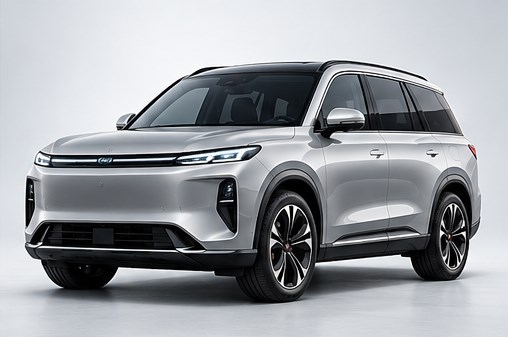
Extended-range electric vehicles occupy an unusual position between battery-electric cars and conventional plug-in hybrids. They use a large traction battery and electric motors for most driving, but carry an internal-combustion engine mainly to generate electricity when the battery is low.
China has become the main market for this architecture, especially in large family SUVs.
How an EREV works
In a typical EREV, the wheels are driven primarily by electric motors. The gasoline engine operates a generator rather than serving as the main source of wheel torque. That allows the vehicle to preserve an EV-like response: immediate motor torque, smooth low-speed operation and regenerative braking.
When the battery state of charge falls, the engine starts and supplies electrical energy. The car can continue for hundreds of kilometers as long as fuel is available.
Some modern systems can have additional mechanical paths or operating modes, so buyers should examine the actual architecture rather than relying only on the marketing label.
Why large SUVs are a natural fit
The IEA reports that EREVs accounted for nearly 25% of electric SUV sales in China in 2024 and about 60% of large electric SUV sales over 4.8 meters long.
Large SUVs have space for both a substantial battery and a fuel engine. They also tend to be purchased by families who take long intercity trips and value redundancy in energy supply.
The added mass and complexity are easier to absorb in a premium vehicle than in a small city car.
EREVs address charging anxiety differently
A BEV solves range anxiety through a larger battery and faster charging network. An EREV carries a smaller battery than a comparable long-range BEV but adds a generator and fuel tank.
This can be attractive in regions where home charging is available but highway fast charging is inconsistent. Daily commuting can be mostly electric, while long holiday trips use gasoline when necessary.
The trade-off is that the owner still maintains an engine, exhaust system, fuel system and emissions controls.
Efficiency depends on how the vehicle is used
An EREV is most efficient when it is charged regularly. If the vehicle is driven mostly on gasoline-generated electricity, energy passes through several conversion stages: fuel to engine output, engine to generator electricity, and electricity to motor torque. Each stage loses energy.
At sustained highway speed, a well-designed parallel PHEV that mechanically connects the engine to the wheels may sometimes be more efficient.
Therefore, an EREV’s low fuel-consumption claim should be interpreted together with its assumed charging behavior.
Why buyers like the user experience
EREVs can deliver the smoothness of electric propulsion without requiring the driver to plan every long trip around chargers. They also allow automakers to use powerful dual-motor layouts and large onboard electronics while keeping the engine acoustically isolated from normal driving.
This is particularly appealing in the premium family segment, where buyers expect quiet cabins, strong acceleration and extensive electrical features.
The export question
EREVs may be well suited to countries with uneven charging infrastructure, but importers need to check regulation carefully. Tax treatment may depend on whether the vehicle is classified as a PHEV, BEV or another hybrid category.
Fuel-emissions testing, electric-range requirements and corporate fleet rules can all influence the economics. A vehicle that qualifies for favorable treatment in China may receive no special benefit elsewhere.
What to compare between EREVs
Key specifications include:
- usable battery capacity;
- electric-only range under the relevant test cycle;
- DC fast-charging capability;
- fuel-tank capacity;
- generator-engine efficiency;
- total vehicle mass;
- engine noise when generating at high load;
- fuel consumption after the battery is depleted.
That last figure is particularly important. Some marketing focuses heavily on the first hundreds of electric kilometers but says little about sustained gasoline operation.
A transitional technology or a durable category?
EREVs are sometimes dismissed as temporary products that will disappear when charging infrastructure improves. That may happen in some markets, but the architecture could remain useful for large vehicles, remote regions and customers who want electric driving without dependence on public charging.
China’s market demonstrates that consumers do not always choose powertrains according to a simple technology hierarchy. They choose the combination of convenience, price and driving experience that fits their lives. EREVs became successful because they solved a specific practical problem, not because they were theoretically the purest form of electrification.
The ownership pattern matters more than the technology label
An EREV owner who plugs in every night may drive most annual kilometers on grid electricity. Another owner with no home charging may operate the same model largely as a gasoline-powered generator vehicle. Their fuel use and emissions can therefore differ dramatically.
This makes charging access central to policy. Incentives based only on the presence of a plug may not deliver the expected fuel savings if drivers rarely charge.
For used-car buyers, both systems need inspection. Battery health matters because electric propulsion remains central, while the engine also needs ordinary maintenance even if it runs only occasionally.
FAQ
Can an EREV drive with an empty fuel tank? Yes, while sufficient battery energy remains, but the total long-distance advantage disappears.
Can it drive with a nearly empty battery? Usually the generator maintains a reserve state of charge, allowing continued driving as long as fuel is available, though maximum performance may be limited in some conditions.
Why not just install a much larger battery? A larger pack adds cost and mass. The generator provides long-distance flexibility without carrying enough battery for the rare longest trip.
Is an EREV automatically more efficient than a PHEV? No. Efficiency depends on architecture and usage, especially after the battery is depleted.