Industry
How China Became the Center of the Global EV Industry
A data-led explanation of how China built the world’s largest electric-vehicle market, production base and battery supply chain.
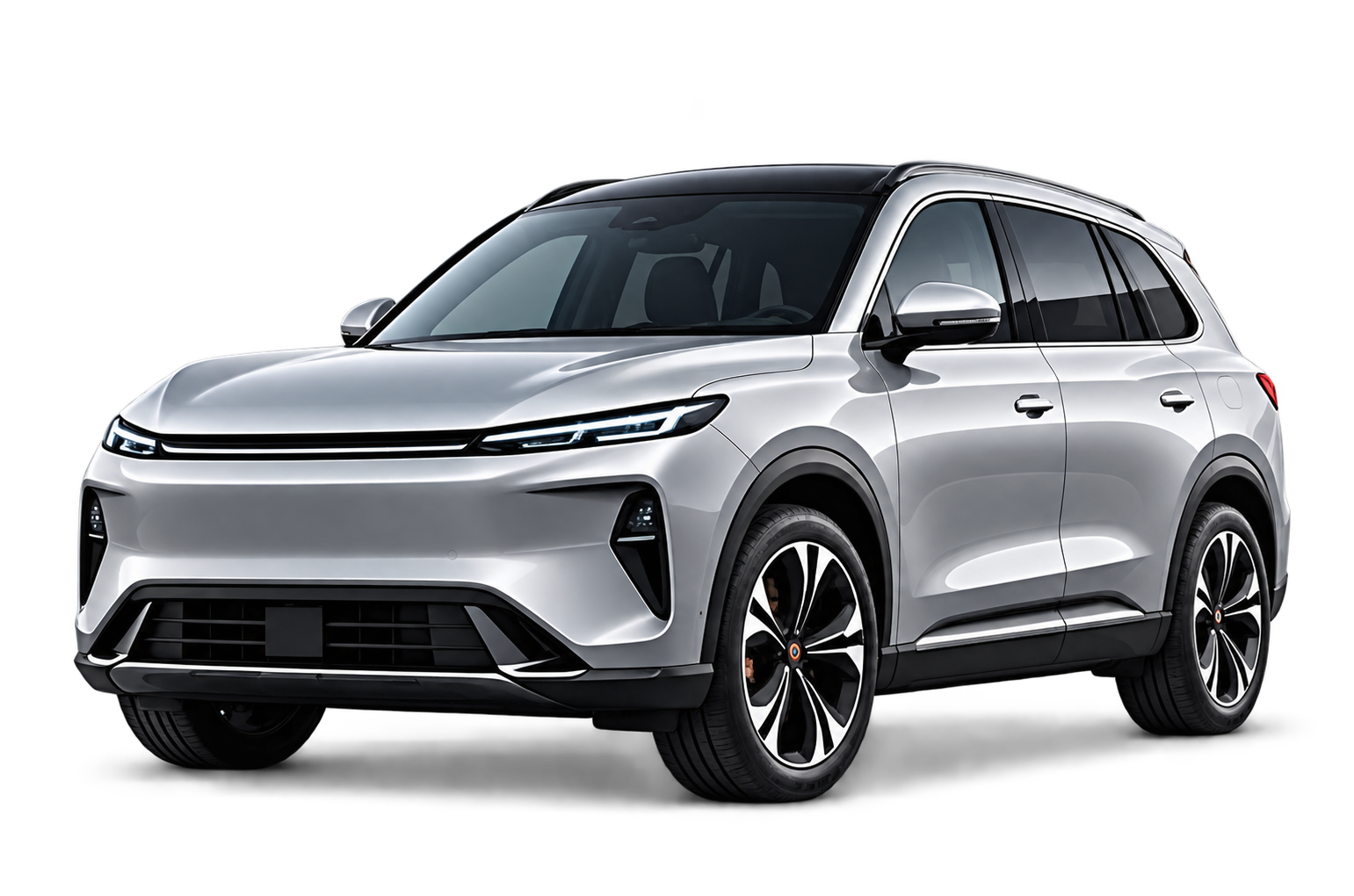
China’s electric-vehicle story is often reduced to one sentence: the country subsidized EVs and became the world’s largest market. That is true but incomplete. The more useful explanation is that demand, manufacturing scale, battery chemistry, supplier density, charging infrastructure and intense price competition reinforced one another over more than a decade.
By 2025, electric cars accounted for nearly 55% of new-car sales in China, according to the International Energy Agency. China also produced roughly three quarters of the world’s electric cars and more than 80% of battery cells. Those numbers describe an industrial system, not just a strong domestic market.
Demand created a large laboratory
A large home market gave automakers room to launch models quickly, test new product categories and cut costs through scale. Chinese buyers could choose from small city cars, sedans, family SUVs, MPVs, performance cars and premium vehicles across battery-electric, plug-in hybrid and range-extended powertrains. In 2025, Chinese manufacturers accounted for more than half of both the BEV models available worldwide and global BEV sales.
That breadth matters because high volume spreads engineering and tooling costs across more vehicles. It also gives suppliers more programs to compete for. A motor maker, semiconductor supplier or thermal-management company can learn from dozens of vehicle launches instead of waiting years for a single platform cycle.
Batteries became a strategic advantage
The battery industry is the clearest example. IEA data shows China produced more than 80% of global battery cells in 2025, about 85% of cathode active material and more than 90% of anode active material used in electric-car batteries. Chinese battery makers also pushed lithium iron phosphate, or LFP, into mainstream passenger vehicles at scale.
LFP is usually less energy dense than high-nickel chemistries, but it can offer lower material costs, strong cycle life and a chemistry that does not require nickel or cobalt in the cathode. In 2025, LFP accounted for more than 55% of EV batteries deployed globally. China’s scale in LFP helped automakers compete aggressively on price, particularly in small and medium vehicles.
Supplier density shortened development cycles
China’s advantage is not limited to vehicle assembly. Battery cells, packs, inverters, motors, thermal systems, displays, cameras, lidar, power semiconductors, die castings, seats and software are available from dense domestic supply networks. That reduces logistics friction and can shorten the feedback loop between automakers and suppliers.
This is one reason the phrase “China speed” appears so often in the auto industry. The phrase should not be treated as magic. It is the result of organizational choices and a dense industrial ecosystem: shorter product cycles, concurrent engineering, extensive use of common modules, fast tooling changes and suppliers that are physically and commercially close to vehicle programs.
Competition matters as much as policy
Government support helped create the market, but by the middle of the 2020s competition itself had become a major driver. In 2025, nearly 70% of BEVs sold in China were cheaper than comparable internal-combustion models before incentives, according to the IEA. That is a very different market from one in which EV adoption depends mainly on purchase subsidies.
The downside is pressure on profitability. Price cuts, frequent facelifts and rapid technology updates can make it difficult for weaker brands to earn adequate returns. The same pressure that makes Chinese vehicles cheaper also encourages manufacturers to look overseas for higher margins.
Exports turned the domestic system into a global force
Chinese electric-car exports doubled to more than 2.5 million units in 2025. In the first half of 2026, electric-car exports grew by more than 120% year over year, according to IEA analysis using CAAM data. Chinese-made EVs are increasingly visible in Europe, Southeast Asia, Latin America and the Middle East.
The important distinction is between exports and overseas retail sales. Cars can be shipped into a market faster than dealers can sell them, so export statistics may temporarily overstate end-user demand. The IEA estimated that in 2025 China’s EV exports exceeded overseas sales by more than 25%, highlighting the need to watch inventories as well as shipment volumes.
Why this industrial model is hard to copy
Other countries can subsidize EV purchases or build a battery plant, but replicating the entire ecosystem is harder. Scale in materials, cells, components, electronics, software talent, factories and domestic demand developed together. A single new plant cannot instantly reproduce the cost structure of a region containing hundreds of specialized suppliers.
That does not mean China will dominate every market indefinitely. Trade measures, local-content rules, brand perception, dealer networks, financing and service quality all influence overseas performance. European and Korean manufacturers retain strong engineering, brand and manufacturing capabilities, while local firms in emerging markets are also expanding.
What to watch next
The next stage is likely to be less about whether China can build competitive EVs and more about where those vehicles are produced, how Chinese firms localize abroad, which brands survive domestic consolidation and how regulation catches up with software-defined vehicles and advanced driver assistance.
For buyers and industry observers, the most useful framework is therefore broader than “Chinese EV versus Western EV.” The real question is how a tightly integrated manufacturing system changes cost, product-development speed and technology diffusion across the global auto industry.
Practical implications for the global industry
For established automakers, China’s scale changes the benchmark for how quickly a mainstream EV can move from concept to production. The competitive response is not necessarily to copy Chinese development cycles exactly. It is to decide which engineering activities truly require long validation periods and which can be accelerated through modular platforms, simulation and closer supplier collaboration.
For suppliers, the center of gravity is also changing. A component company that once designed primarily around European, Japanese or North American vehicle programs may increasingly need to qualify products with Chinese OEMs first. Winning those programs can mean high volume, but it can also involve tougher cost targets and faster design changes.
For governments, the difficult policy question is how to build local capability without simply raising vehicle prices. Tariffs can protect domestic manufacturers, but battery plants, charging networks, technical training and competitive supplier ecosystems are what ultimately determine whether a region can produce EVs efficiently.
FAQ
Did subsidies alone create China’s EV lead? No. Subsidies and industrial policy were important in the early market, but today the advantage also includes battery scale, supplier density, domestic competition and a very large customer base.
Is China’s advantage only in low-cost EVs? No. Chinese manufacturers now compete from small city cars through premium SUVs, MPVs and performance vehicles. Cost remains an advantage, but software and charging technology are increasingly important too.
Can another country reproduce the model quickly? Individual parts can be replicated, but recreating the full ecosystem is slow because materials, suppliers, skills, factories and demand need to develop together.