Guides
How to Evaluate a Chinese Vehicle for Import: A Practical Buyer Checklist
Buying directly from a Chinese vehicle supplier can save money, but homologation, software, parts and charging compatibility can erase the apparent advantage.
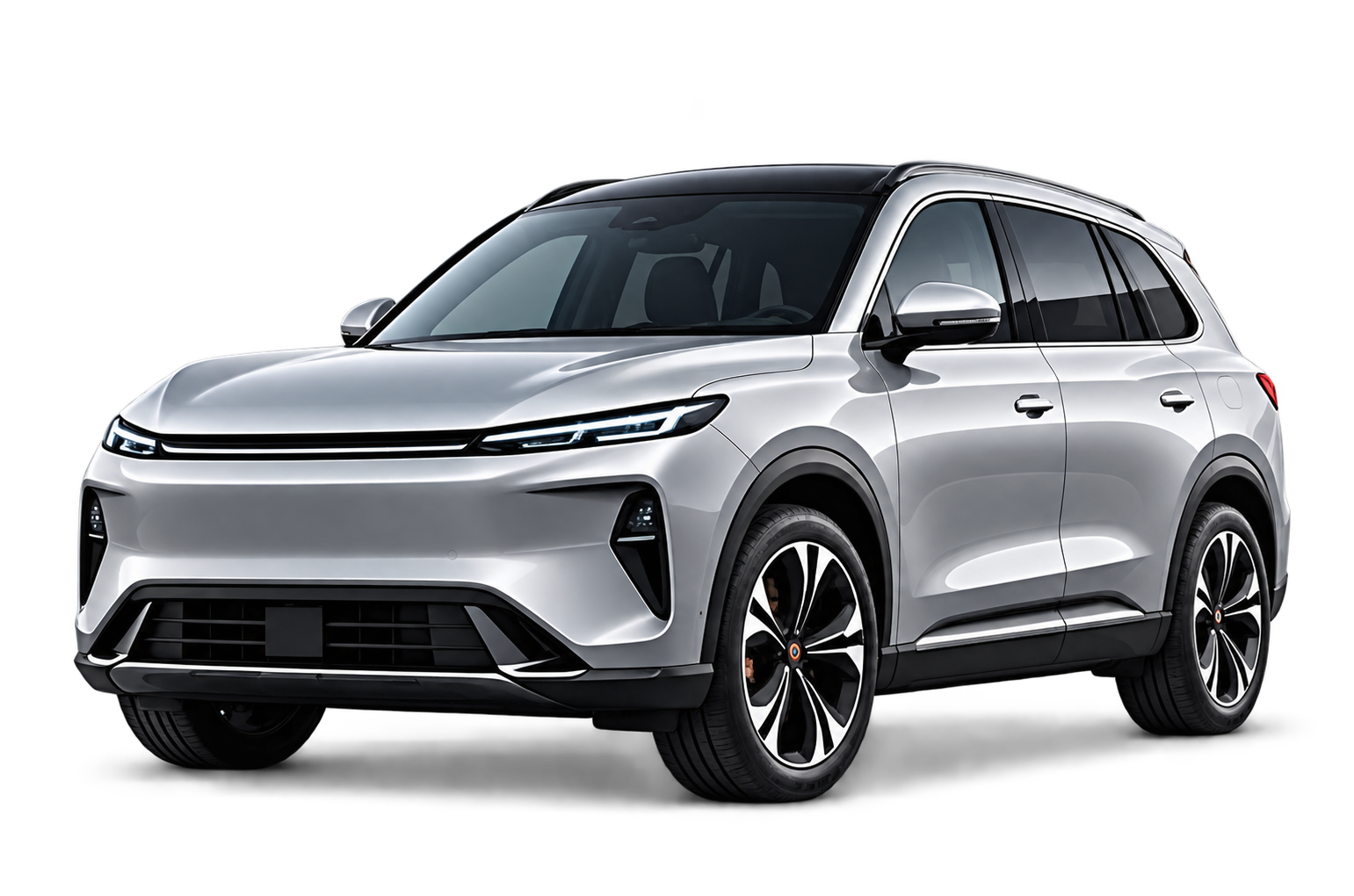
The factory price of a Chinese vehicle can look extremely attractive. For a professional importer, that price is only the beginning of the calculation.
A vehicle that cannot be legally registered, charged reliably, repaired locally or updated outside China can become expensive very quickly. The right approach is to treat the purchase as a compliance and lifecycle project rather than a sourcing transaction.
1. Confirm the exact regulatory configuration
Start with the destination market’s type-approval requirements. Do not assume a domestic Chinese model can be registered abroad because a visually similar export version exists.
Ask for the homologation certificate, test reports and the exact model or variant code. Verify lighting, glazing, braking, tire specifications, electromagnetic compatibility, crash requirements and emissions rules for plug-in hybrids.
The VIN and certificate should correspond to the vehicle you will actually receive.
2. Verify charging compatibility
For BEVs and plug-in vehicles, confirm both AC and DC connectors, maximum voltage, communication protocol and local charger testing.
A physical adapter is not a substitute for validated interoperability. Ask for evidence that the export configuration has been tested on common charging networks in your market.
Also check whether the navigation system contains local charging stations and whether battery preconditioning works when routing to them.
3. Identify the battery, not just the capacity
Request the cell supplier, chemistry, pack model, usable capacity and warranty terms. Confirm how replacement packs or modules are supplied.
Battery transport and storage involve dangerous-goods rules, so a replacement pack may be much harder and more expensive to ship than a conventional spare part.
For fleet programs, negotiate a long-term battery supply plan before the first vehicles arrive.
4. Test connected services outside China
Many Chinese vehicles depend heavily on cloud services. Navigation, voice control, remote unlocking, phone apps, entertainment and OTA updates may rely on Chinese servers or accounts.
Confirm which services are officially supported in the destination country. Grey-market vehicles sometimes lose major functions when the original SIM or account cannot be activated abroad.
Data-protection compliance also needs review, especially for fleets collecting driver or location data.
5. Build the parts list before the sales launch
Do not wait for the first accident to discover that a headlamp has a twelve-week lead time. Create a recommended initial stock covering collision parts, suspension components, glass, sensors, charge ports, cooling pumps and electronic modules.
Ask the manufacturer for parts catalogs, labor times, diagnostic procedures and wiring diagrams.
6. Get diagnostic access in writing
Modern vehicles require software tools to replace and calibrate components. A new radar, camera or battery controller may need online coding before it works.
Confirm whether independent importers receive diagnostic software, security credentials and calibration tools. If every repair requires remote approval from China, downtime can become unacceptable.
7. Model warranty cost honestly
A warranty is only valuable if there is a process for reimbursement and parts supply. Clarify who pays labor, freight and diagnostic time.
For a small importer, one battery replacement can erase the margin on several vehicles. Warranty reserves should be included in the business model from the beginning.
8. Check ADAS and safety systems locally
Driver-assistance features can depend on map data, road markings and local regulation. Test lane keeping, speed-sign recognition, automatic emergency braking and parking functions in the destination market.
Never market a Chinese-market NOA or autonomous-driving claim unless the feature is legally approved and actually enabled locally.
9. Calculate landed cost, not FOB price
A useful landed-cost model includes:
| Cost item | Commonly missed? |
|---|---|
| Vehicle price | No |
| Ocean freight and insurance | Sometimes |
| Import duty and VAT/GST | Sometimes |
| Anti-subsidy or special tariff | Often |
| Port and storage fees | Often |
| Homologation and testing | Often |
| Software localization | Often |
| Initial parts stock | Often |
| Warranty reserve | Often |
| Dealer training and tools | Often |
A vehicle can remain competitive after all of these costs, but only if they are known in advance.
10. Start with a pilot fleet
Before ordering hundreds of vehicles, import a small group and run them for several months. Track charging failures, software issues, parts demand, real-world energy consumption and customer complaints.
A pilot converts uncertainty into data. It also gives the supplier time to correct export-specific issues before a larger shipment.
The cheapest vehicle is not always the best import
China offers an enormous range of capable vehicles, and direct sourcing can create real opportunities. The most successful import programs, however, usually select suppliers for engineering support and long-term service rather than the lowest quoted price.
The right question is not “How cheap can I buy this car?” It is “Can I support this vehicle legally, technically and financially for ten years?”
Red flags during supplier due diligence
Be cautious when a supplier provides screenshots instead of traceable certificates, avoids naming the cell manufacturer, cannot supply an English parts catalog or promises that software services will “probably” work abroad. These are not proof of a bad product, but they indicate unresolved operational risk.
Another warning sign is a price that depends on a domestic-market vehicle never intended for export. Parallel-export vehicles can be attractive, but the buyer must accept that the original manufacturer may not provide warranty or cloud support outside China.
For larger programs, visit the factory and service operation if possible. Review quality-control processes, spare-parts stocking and how field failures are escalated. A strong export partner should be able to show a repeatable process rather than relying on one salesperson.
FAQ
Should I import a Chinese domestic-market car if it is much cheaper? Only after confirming legal registration, charging, software and warranty. The savings can disappear if any of those fail.
What is the most important document? There is no single one, but type-approval evidence tied to the exact variant is fundamental.
How many pilot vehicles should I buy? Enough to cover the intended use cases and climates without creating an unmanageable support burden; the exact number depends on the program.
What should be negotiated before purchase? Warranty reimbursement, parts pricing, diagnostic access, software support and supply of replacement high-voltage components.