Industry
From Battery Cell to Complete Car: Inside China’s EV Supply Chain
China’s EV advantage is built on an unusually dense chain of batteries, motors, electronics, software and vehicle assembly. Here is how the pieces fit together.
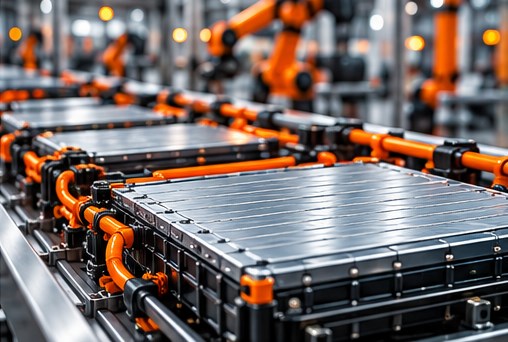
An electric vehicle is simpler than a combustion car in some mechanical respects, but its supply chain is not simple. A modern EV combines mined and refined materials, battery cells, pack structures, power electronics, motors, semiconductors, thermal systems, high-voltage connectors, software and conventional automotive components.
China’s competitive position comes from strength across many of those layers at the same time.
Upstream materials
Battery production begins with materials such as lithium, graphite, iron phosphate, nickel and manganese. China is not the largest miner of every raw material, but it has built enormous refining and processing capacity.
The IEA estimates that China produced about 85% of global cathode active material and more than 90% of anode active material for electric-car batteries in 2025. This midstream position is strategically important because raw minerals are not ready to become batteries without extensive processing.
Cell manufacturing
China produced more than 80% of global battery cells in 2025. Large companies such as CATL and BYD operate at scales that allow continuous investment in cell chemistry, manufacturing equipment and quality control.
Cell factories are capital intensive. High utilization is crucial because depreciation, clean-room systems and formation equipment must be paid for whether the factory is full or half empty. A large domestic EV market helps keep these plants busy.
Pack integration
Cells are assembled into packs with cooling, structural protection, electrical connections and a battery-management system. The industry has moved toward cell-to-pack and structural designs that reduce inactive material.
Pack-level innovation is important because it can offset lower cell energy density. LFP becomes more competitive when engineers remove modules, reduce enclosure mass and improve space utilization.
Motors, inverters and power electronics
The traction motor converts electricity into torque, while the inverter controls the flow between the battery and motor. Silicon carbide power devices are increasingly used in high-voltage platforms because they can reduce switching losses and support high power density.
China has a large domestic market for motors and inverters, with suppliers serving many vehicle brands. Common components can be manufactured in high volume and improved quickly.
Thermal management connects everything
The battery, cabin, power electronics and motor all produce or consume heat. Modern EVs often use integrated heat pumps and multi-way coolant circuits to move energy around efficiently.
Thermal management has a direct effect on charging speed, winter range and component durability. This makes suppliers of valves, compressors, pumps and heat exchangers strategically important even though consumers rarely see their names.
Software and computing are now core components
Vehicle control software, infotainment, driver assistance and cloud connectivity are increasingly developed in parallel with hardware. Chinese automakers often use centralized computing architectures and frequent over-the-air updates.
That can reduce the number of separate electronic control units, but it also increases cybersecurity and software-validation requirements. A single central computer may control functions that previously lived in many independent boxes.
Conventional auto suppliers still matter
An EV still needs brakes, suspension, glass, tires, seats, airbags, crash structures, lighting and interior materials. China’s long history as a manufacturing base for conventional vehicles provided an existing supplier foundation before the EV boom.
The EV transition therefore added new layers to a mature automotive ecosystem rather than building everything from zero.
Why geographic concentration matters
When battery plants, electronics suppliers, mold makers, test laboratories and assembly factories are located within the same industrial regions, engineering changes can move faster. Teams can inspect problems in person and suppliers can deliver prototypes quickly.
That density is difficult to reproduce through isolated investments. A country may attract a vehicle assembly plant but still import cells, inverters, displays and software from abroad.
The supply chain is beginning to globalize
Chinese companies are expanding cell and vehicle production outside China. That will make the network less geographically concentrated, but many high-value materials and components may remain connected to Chinese suppliers for years.
For procurement teams, the key lesson is to map the chain beyond the automaker. Ask who makes the cells, who supplies the BMS, where power semiconductors come from, how replacement parts are stocked and whether software tools are available in the destination market.
China’s EV strength is best understood as a network advantage. The finished car is the visible product, but the deeper advantage comes from thousands of specialized companies operating behind it.
Where supply-chain risk remains
Concentration improves efficiency but can create vulnerability. A disruption at a major cell producer, semiconductor supplier or material-processing region can affect many vehicle programs at once.
Automakers are therefore balancing cost with resilience. Dual sourcing, regional factories and standardized components can reduce risk, but they may increase cost or slow optimization.
For overseas manufacturers using Chinese components, localization is often gradual. Final assembly may move first, followed by packs and high-value modules, while raw-material processing remains concentrated in Asia. A truly local supply chain can take many years to build.
FAQ
Is battery-cell production the whole reason China leads? No. Materials processing, components, vehicle factories, software and a mature conventional auto supply base are all important.
Why does supplier density improve speed? Engineers can prototype, test and modify parts faster when suppliers and tooling companies are nearby.
Will overseas factories end China’s supply-chain dominance? They will diversify production, but many high-value materials and components may remain linked to Chinese suppliers.
What should a buyer map beyond the automaker? Cell supplier, BMS, inverter, diagnostic software, replacement-parts chain and critical electronic modules.