Industry
The Next Five Years of China’s Auto Industry: Batteries, Software, Exports and Consolidation
China has already reshaped the EV market. The next phase will be defined by industry consolidation, overseas manufacturing, battery innovation and stricter software regulation.
China’s auto industry has already passed several milestones that once looked distant. Electric cars became more than half of new-car sales in 2025, China produced roughly three quarters of the world’s electric cars, and Chinese battery companies supplied a large majority of global EV cell demand.
The next five years will not simply repeat that growth curve. The industry is entering a more difficult phase in which scale alone is not enough.
1. Domestic competition will force consolidation
China has more vehicle brands and model lines than the market can support indefinitely. Frequent price cuts and rapid refresh cycles are difficult to sustain when sales growth slows.
The first half of 2026 illustrated the pressure: the IEA reported a sharp year-over-year decline in China’s domestic car sales even as exports surged. Companies with weak balance sheets or little differentiation may be forced to merge, shrink or exit.
Consolidation does not necessarily mean fewer vehicle choices immediately. Large groups can maintain multiple brands while sharing platforms, batteries and software underneath.
2. Exports will become overseas manufacturing
Direct exports are growing rapidly, but tariffs and local-content policies encourage Chinese automakers to build abroad. Plants in Europe, Southeast Asia, Latin America and other regions can reduce logistics costs and political risk.
The strategic shift is from “made in China and exported” toward “Chinese-controlled global production.” That will make supply chains more complex and national labels less useful.
3. Battery chemistry will diversify
LFP is likely to remain central because of cost and scale. High-nickel batteries will continue where energy density matters. Sodium-ion is moving from research toward early commercialization, particularly for lower-cost or cold-weather applications.
Solid-state batteries remain a major research focus, but mass-market deployment depends on manufacturing yield, cost and cycle life rather than laboratory energy density alone.
The most important improvements may be incremental: better pack integration, faster charging, thermal management and lower-cost materials.
4. Charging speed will become less of a headline and more of a network problem
Vehicles are already reaching very high peak charging powers. The harder challenge is deploying enough grid capacity and reliable chargers to make those speeds useful in daily travel.
Highway hubs may use energy storage and smart power allocation to serve many cars without requiring every stall to draw maximum power at the same time.
Consumers will increasingly judge charging by reliability and minutes of range added, not theoretical peak kW.
5. Driver assistance will face stricter boundaries
China’s 2026 mandatory standards for combined driver assistance and automated-driving systems indicate a transition from feature competition to formal safety regulation.
Systems will still improve rapidly, but marketing language, driver monitoring, software change control and data recording will receive greater scrutiny.
This is healthy for the industry. Advanced assistance cannot scale safely if users misunderstand who is responsible for driving.
6. Software support will become a resale-value issue
A ten-year-old combustion car can still perform its basic functions even if the manufacturer’s app disappears. A software-defined EV may depend on cloud services, maps, certificates and updates.
Buyers will therefore care more about long-term software support. Brands that stop updating vehicles after only a few years may suffer weaker residual values.
Regulators may also require clearer support commitments and cybersecurity maintenance.
7. Commercial vehicles could deliver the biggest energy impact
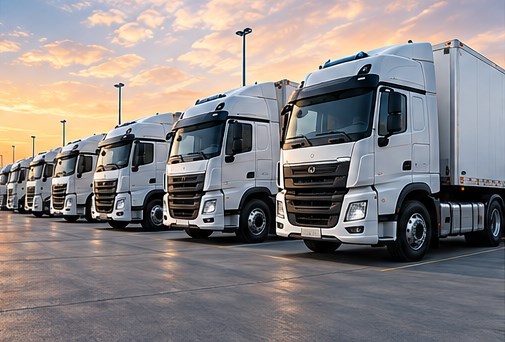
Electric trucks, vans and buses travel more kilometers and consume more energy per vehicle than passenger cars. China’s electric-truck sales exceeded 400,000 in 2025, and heavy-duty adoption is growing rapidly in controlled industrial routes.
This segment can reduce oil use substantially even without electrifying every long-haul route.
8. Trade policy will remain part of product planning
The EU’s countervailing duties on Chinese BEVs show that vehicle engineering, manufacturing location and trade strategy are increasingly linked.
Automakers may choose PHEVs, local assembly or different sourcing structures partly because of policy. Product planners therefore need to understand customs rules almost as well as consumer preferences.
9. Cost advantages will be challenged, not erased
Other regions are building battery plants and low-cost EV platforms. Chinese firms expanding abroad will also face higher labor, logistics and compliance costs than at home.
China’s advantage may narrow, but its supplier density and scale will remain difficult to replicate quickly. The competition will shift from who can build an EV at all to who can build it profitably, support it globally and update it for years.
10. The industry will look more global and less national
A future vehicle may use Chinese battery cells, European safety engineering, American chips, Southeast Asian assembly and software developed by teams across several countries.
This makes simple narratives about one country “winning” the auto industry less useful. The more important questions concern control of high-value technology, resilience of supply chains and the ability to operate profitably across regulatory systems.
China’s auto industry will remain central to those questions. The next five years are likely to be defined less by explosive first-time EV adoption and more by maturity: consolidation, globalization, regulation and the long-term economics of supporting millions of software-defined electric vehicles.
Three indicators that will reveal the next phase
First, watch factory utilization and profitability rather than sales alone. A company can report strong deliveries while still destroying value through discounts. Sustainable margins will reveal which business models survive consolidation.
Second, watch overseas local production. Export growth shows demand for Chinese vehicles, but factories abroad show a deeper commitment and a willingness to operate under local labor, environmental and regulatory rules.
Third, watch software support and safety regulation. As mechanical performance converges, long-term software quality may become as important to brand reputation as engine reliability once was.
FAQ
Will China remain the largest EV producer? Current manufacturing scale is enormous and the IEA expects China to remain central, but production is becoming more geographically diversified.
Will BEVs replace PHEVs and EREVs quickly? Not necessarily. Different markets may maintain mixed powertrain strategies for years depending on charging access and policy.
What technology could disrupt LFP? Sodium-ion and solid-state batteries are important areas to watch, but cost, manufacturing yield and durability will determine adoption.
What is the biggest strategic risk for Chinese automakers? Sustaining profitability and global support while expanding faster than domestic demand.
Sources
- IEA, Global EV Outlook 2026 — Executive Summary
- IEA, Electric Car Markets in a Time of Uncertainty — Executive Summary
- IEA, Global EV Outlook 2026 — Electric Vehicle Batteries
- IEA, Global EV Outlook 2026 — Manufacturing and Trade
- IEA, Global EV Outlook 2026 — Trends in Other EV Modes
- MIIT, GB 47955—2026 combined driving assistance safety requirements
- MIIT, GB 44721—2026 automated driving system safety requirements
- MIIT, 2026 automotive standardization priorities