Industry
Why Chinese EVs Are So Price-Competitive
Cheap labor is not a sufficient explanation for Chinese EV pricing. Battery scale, supplier density, platform choices and intense competition matter more.
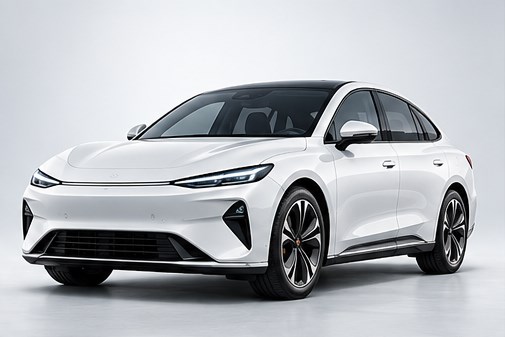
Chinese electric vehicles are often described as cheap because they are made in a lower-cost country. That explanation is too simple. Automotive manufacturing is highly automated, many inputs are globally traded, and China’s labor costs are not the lowest in the world.
The stronger explanation is an industrial system that lowers cost at several layers at once.
Battery scale changes the starting point
The battery is one of the most expensive components in a BEV. China produced more than 80% of the world’s battery cells in 2025 and even larger shares of important active materials, according to the IEA.
Scale matters because factories, equipment, engineering and purchasing costs are spread across huge volumes. China also led the adoption of LFP chemistry, which avoids nickel and cobalt in the cathode and can reduce material costs.
A lower-cost battery does not automatically make a cheap car, but it gives the vehicle program a major advantage before body, interior and software costs are added.
Vertical integration can remove supplier margins
Some Chinese automakers produce batteries, motors, power electronics and semiconductor components internally or through tightly controlled affiliates. Vertical integration can reduce transaction costs and provide stronger control over component supply.
It can also accelerate engineering. If the battery team and vehicle team work inside the same corporate system, changes to pack size, cooling or voltage architecture may be made faster than in a program that depends on several independent tier-one suppliers.
Vertical integration is not always cheaper; internal operations can become inefficient. The advantage appears when scale is large enough to keep specialized factories highly utilized.
Dense supplier clusters reduce friction
China’s automotive regions contain large numbers of component suppliers within relatively short distances. Tooling, electronics, seats, displays, castings, sensors and thermal components can be sourced domestically.
That reduces shipping time and allows quicker engineering iterations. A supplier can modify a part and return a new sample quickly. Shorter feedback cycles can reduce development time and inventory.
Product cycles are unusually fast
Many Chinese automakers update vehicles more frequently than traditional global manufacturers. Fast cycles can reduce the time during which a platform must recover its development cost, especially when common modules are reused across multiple brands and models.
There is a downside. Rapid refreshes can hurt residual values and leave owners feeling that a newly purchased car became outdated quickly. The same system that creates rapid feature improvements can also increase depreciation risk.
Competition compresses margins
China’s domestic market has experienced intense price competition. The IEA reports that in 2025 nearly 70% of BEVs sold in China were already cheaper than comparable internal-combustion vehicles before incentives.
That result cannot be explained only by subsidies. It reflects a market where many manufacturers are competing for the same buyers, often with similar body styles and specifications. Companies cut prices, add equipment or launch new trims to maintain volume.
The downside is financial pressure. A low retail price is not proof of a sustainable business model. Some companies may be selling with very thin margins in order to keep factories running and maintain market share.
Software and electronics are treated differently
Chinese buyers often expect large screens, voice assistants, connected apps, advanced parking and driver-assistance functions even in mid-priced cars. Domestic electronics supply and software development allow automakers to add these features at lower incremental cost than older premium-only architectures.
A large display is not necessarily expensive hardware. The cost difference depends on computing platform, display quality, sensors and software licensing rather than visual size alone.
Design-to-cost is visible across the vehicle
Price competitiveness also comes from ordinary engineering choices: fewer physical buttons, shared electronics modules, simplified option structures, high-pressure casting, common seats or HVAC modules and fewer powertrain variants.
The best low-cost vehicle is not simply a premium car with cheaper materials. It is designed around a cost target from the beginning.
Low purchase price can hide ownership costs
Importers and buyers should look beyond the factory or sticker price. Shipping, tariffs, homologation, insurance, parts inventory, diagnostics, battery replacement and resale value all affect total cost of ownership.
A vehicle that is inexpensive in China may be less compelling after it is adapted to another market. Conversely, strong efficiency and low maintenance can make a slightly more expensive EV attractive over several years.
The durable advantage is the system
China’s price advantage is strongest where batteries, components, manufacturing scale and domestic competition reinforce one another. That system is harder to copy than any single subsidy or factory technique.
It is also not permanent. As Chinese companies localize production abroad, labor and regulatory costs rise. As other regions build battery plants and lower-cost EV platforms, the gap can narrow. The important point is that current price competitiveness is primarily industrial, not simply a story about low wages.
Cost advantage versus sustainable profit
A low price can come from genuine manufacturing efficiency, but it can also come from unusually low margins. Those two situations look identical to the buyer at first and very different over the long term.
For importers, supplier financial health therefore matters. A company that cannot support warranty claims, software servers or replacement parts for many years can turn an inexpensive vehicle into an expensive liability.
Residual value is another part of the equation. Rapid model updates and aggressive new-car discounts can reduce used-car prices. Leasing companies will respond by charging more if they expect weak resale values, which can offset some of the original purchase-price advantage.
FAQ
Are Chinese EVs cheap mainly because of labor? No. Battery scale, materials processing, supplier clusters, platform reuse and competition are more important explanations.
Do subsidies still matter? Policy support has mattered historically and still affects the market, but many Chinese BEVs are now cost-competitive before consumer incentives.
Can low prices be sustained forever? Not necessarily. Competition may force consolidation and some companies may need higher margins.
Why are electronics features inexpensive? China’s consumer-electronics supply chain and large production volumes can lower the incremental cost of screens, sensors and computing hardware.