Technology
Why LFP Became China’s Default EV Battery Chemistry
LFP now powers a large share of the global EV market. China’s supply chain explains why the chemistry became central to affordable electric cars.
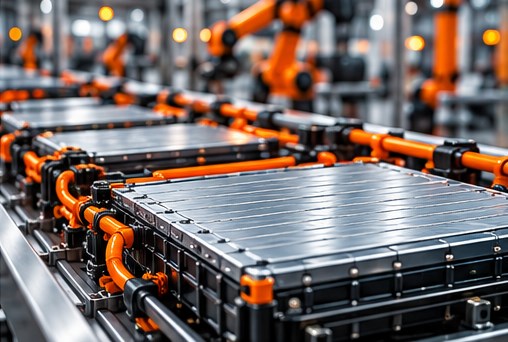
Lithium iron phosphate, or LFP, moved from a chemistry associated mainly with buses and entry-level electric cars to one of the dominant battery technologies in the global EV market. That shift is inseparable from China.
According to the International Energy Agency, LFP batteries accounted for more than 55% of EV batteries deployed globally in 2025. China was both the largest consumer and the center of the supply chain. Chinese companies also held roughly three quarters of global electric-car battery deployment by manufacturer headquarters.
What LFP changes at the material level
An LFP cathode uses lithium, iron and phosphate rather than nickel and cobalt-rich materials used in many NMC and NCA cells. That reduces exposure to nickel and cobalt prices and can simplify material sourcing. Iron and phosphate are comparatively abundant and inexpensive.
The trade-off is energy density. High-nickel chemistries can generally store more energy for a given battery mass or volume. That can matter in premium long-range vehicles where every kilogram and centimeter of packaging space is valuable.
Why the old energy-density argument became less decisive
Cell chemistry is only one part of battery design. Automakers and battery producers improved pack architecture by removing modules, increasing cell-to-pack efficiency and integrating the battery more closely with the vehicle structure. Better packaging allows a lower-energy-density cell to produce a competitive pack-level result.
This is one of the reasons LFP spread from small cars into mainstream sedans and SUVs. Improvements in motor efficiency, aerodynamics, thermal management and charging also reduce the need to solve every range problem by increasing cell energy density.
Cost is the central advantage
The IEA notes that LFP can reduce EV production costs and that deployment remains concentrated in China, where manufacturers lead in LFP materials and production. Scale strengthens that advantage. High factory utilization, local cathode and anode production, established equipment suppliers and large domestic demand all lower unit costs.
For a mass-market EV, a modest reduction in battery cost can be more valuable than a small increase in maximum range. Consumers may prefer a cheaper car that comfortably covers daily driving over a more expensive vehicle carrying a larger high-nickel pack.
LFP also fits high-cycle applications
LFP is known for strong cycle life, which is useful in taxis, ride-hailing vehicles, delivery vans and fleet vehicles that accumulate mileage quickly. Thermal behavior is another reason it is attractive, although no lithium-ion battery should be described as inherently “fireproof.” Pack design, cell quality, charging control, crash protection and thermal management remain critical.
China’s 2025 battery-safety standard illustrates that point. GB 38031-2025 adds stricter thermal-diffusion requirements, a bottom-impact test and a safety test after repeated fast charging. Chemistry matters, but safety is a system property.
The global effect of Chinese LFP scale
LFP is no longer a China-only technology. Its share has grown in emerging markets because many imported Chinese vehicles use LFP. The IEA reports that LFP powered roughly two thirds of electric-car sales in emerging and developing economies in 2025.
Outside China, however, the supply chain is still highly concentrated. Even as automakers in Europe and North America adopt LFP, many depend directly or indirectly on Chinese materials, technology or cells.
When NMC still makes sense
LFP is not automatically the right choice for every vehicle. High-performance cars, long-range vehicles and products where battery mass is especially constrained may still benefit from high-nickel chemistries. Cold-weather performance and charging strategy can also influence the choice.
A useful comparison therefore looks beyond chemistry names:
| Battery question | What to check |
|---|---|
| Pack usable energy | More relevant to range than gross capacity alone |
| Pack-level energy density | Captures packaging efficiency as well as cell chemistry |
| Charging curve | Peak kW alone can be misleading |
| Thermal system | Influences charging, safety and cold-weather performance |
| Warranty and cycle assumptions | Important for fleet or high-mileage use |
| Cell supplier and traceability | Matters for service, compliance and recalls |
What comes after LFP?
Sodium-ion batteries are entering early scale-up, again led by Chinese battery companies. The IEA says current sodium-ion cells remain constrained by lower energy density, but they can perform well at very low temperatures and reduce dependence on lithium.
That does not mean sodium-ion will replace LFP quickly. LFP already benefits from enormous scale and continuous improvement. The more likely near-term outcome is segmentation: LFP dominates many affordable and mainstream cars, high-nickel batteries remain important for energy-dense applications, and sodium-ion develops in niches where cost or cold-weather performance is especially valuable.
The larger lesson is that battery competition is not simply a race for the highest energy density. China’s EV market has shown that cost, manufacturability, safety, cycle life and system-level packaging can be just as decisive.
How to read battery marketing claims
Battery advertisements often compare chemistry at cell level, while vehicle owners experience the complete pack. Pack structure, usable state-of-charge window, thermal management and software can change the real result substantially. Two LFP packs with the same nominal capacity can differ in charging speed, cold-weather range and long-term degradation.
It is also important to distinguish gross and usable energy. Automakers often reserve a buffer at the top and bottom of the battery to protect longevity. A nominal 70 kWh pack may therefore expose less than 70 kWh to the driver.
For procurement teams, cell traceability is as important as chemistry. A model name may continue for several years while the manufacturer changes cell supplier or pack revision. Test data and replacement-part planning should be tied to the exact battery variant rather than the vehicle badge alone.
FAQ
Is LFP safer than NMC? LFP has favorable thermal characteristics, but pack safety still depends on structure, cooling, electronics and crash protection. No chemistry eliminates risk.
Does LFP always have shorter range? Not necessarily. Vehicle efficiency and pack size can compensate for lower cell energy density.
Why is LFP cheaper? Its cathode avoids nickel and cobalt and China has enormous manufacturing scale for LFP materials and cells.
Will sodium-ion replace LFP soon? It is more likely to complement LFP first, especially in cost-sensitive or cold-weather applications where its characteristics are useful.